
Robotics · Autonomy in the cockpit
Garmin Autoland: more than 2,500 aircraft can now land themselves in an emergency
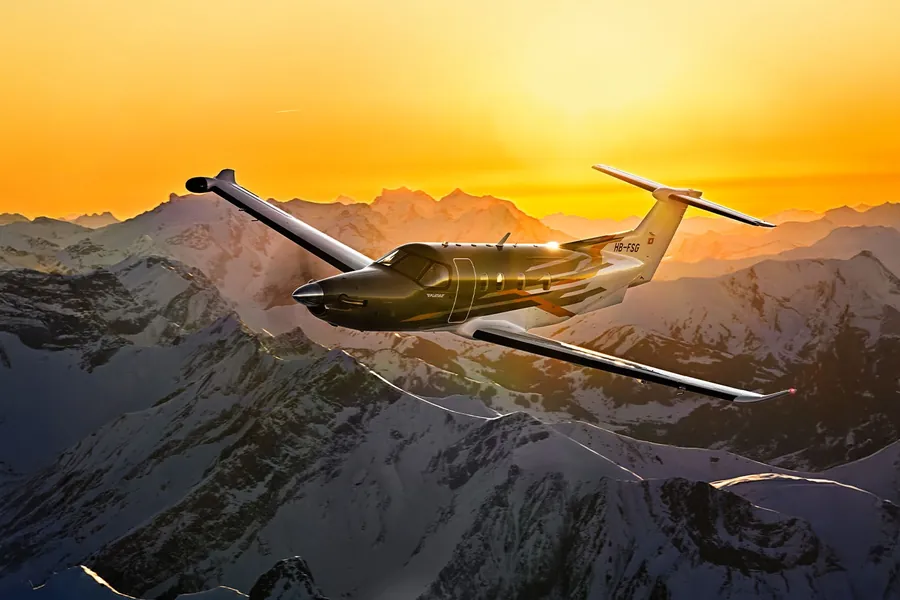
Photo: Garmin
More than 2,500 aircraft now carry Garmin Autoland, the first certified autonomous system that lands a plane on its own when the pilot cannot. Garmin reached the mark just over six years after the first certification.
Most debates about autonomous machines happen on the road. One of the most mature examples flies. Garmin announced on 14 October 2026 that more than 2,500 aircraft are now equipped with Autoland, a system that takes control in an emergency and lands the aircraft without human intervention. Garmin calls it the world's first certified autonomous system of its kind. It has received the prestigious Robert J. Collier Trophy and numerous other industry honours.
What happens when the button is pressed
Autoland is built for the worst moment of a flight: the pilot is incapacitated and nobody else on board can fly. A passenger presses a single dedicated button. The system can also activate itself if it detects that the pilot is no longer interacting with the aircraft. From then on the software works through the sequence a pilot would follow. It calculates a flight path to the most suitable airport, avoids terrain and adverse weather, flies a stabilised approach to the runway and lands. Pilot, passengers and air traffic control are kept informed along the way. Garmin sums up the task in the three classic duties of the pilot in command: aviate, navigate, communicate.

From one model to more than fifteen
The first certification came in May 2020 on the Piper M600 SLS. Today Autoland is available on more than 15 certified models, from piston-powered aircraft to twin-engine jets. The list includes the Piper M700 FURY, the Cirrus Vision Jet G2, G2+ and G3, the Cirrus SR20 G7+, SR22 G7+ and SR22T G7+, the Daher TBM 940, TBM 960 and TBM 980, the HondaJet Elite II, selected Beechcraft King Air models, the Pilatus PC-12 PRO and the Epic E1000 AX.
In 2026 alone four models were added: the HondaJet Elite II, the Embraer Phenom 300EV, the Pilatus PC-12 PRO and the Epic E1000 AX. With the HondaJet and the Phenom, Autoland reached twin-engine jets for the first time, a new segment of business aviation. For 2027 Garmin expects certification for the Cessna Citation M2 Gen3, CJ3 Gen3 and CJ4 Gen3 from Textron Aviation and for the Beechcraft Denali.
Retrofits count too
Not every Autoland aircraft left the factory with the system active. Of the more than 2,500, nearly 250 were retrofitted after delivery. Some were eligible platforms delivered without the function enabled; others went through a full retrofit, as with the King Air, a type produced more than 50 years ago. Autoland is now also part of the Garmin integrated flight decks G1000 NXi, G3000 and G3000 PRIME.
Why this matters beyond aviation
Robotics is often judged by demonstrations. Autoland is certified aircraft model by aircraft model, and that makes it a useful reference for anyone following robotaxis and the driverless mile. The system does one narrowly defined job, only in an emergency, and its reach has grown model by model over six years instead of in a single leap. Phil Straub, Executive Vice President and Managing Director Aviation at Garmin, describes the milestone as a sign of "the incredible adoption" of a technology meant to give pilots and passengers confidence "when it matters most".

The quieter lesson is about trust. A passenger who has never flown is expected to hand control to a machine at the most stressful moment imaginable. That only works if the machine has proven itself under rules written for the worst case, and that is the route Garmin has taken.
Read next
Read next
 Robotics
Robotaxis
The driverless mile is now a business
Twenty years after a Stanford car crossed the Mojave alone, paying passengers ride without a driver in a growing list of cities. The technology stopped being the question. The unit economics started being it.
 Robotics
Drones and delivery robots
The last mile is the expensive one
Delivery by air has been five years away for a decade. Meanwhile the boring version, a cooler box on six wheels moving at walking pace, quietly started working.
 Deep Tech
eVTOL
The aircraft waiting for a certificate
Electric vertical take-off aircraft fly, carry passengers and look like the future. Whether they become transport or a luxury novelty depends on certification, batteries and noise, in that order.
More in this department